Category: Projects

  • Banksmeadow Public School ESBS Weed Control Project

    Banksmeadow Public School ESBS Weed Control Project

    Greater Sydney Local Land Services provided our co-op with a grant to assist in weed control within an Eastern Suburbs Banksia Scrub (ESBS) remnant on the grounds of Banksmeadow Public School. ESBS is a critically endangered ecological community, with around 2% of its original range remaining. This specific ESBS patch is a biobank offset for losses caused by expansion works at NSW Golf Club. The Banksmeadow Public School site supports a specific type of ESBS remnant which occurs on high sand dunes and crests.
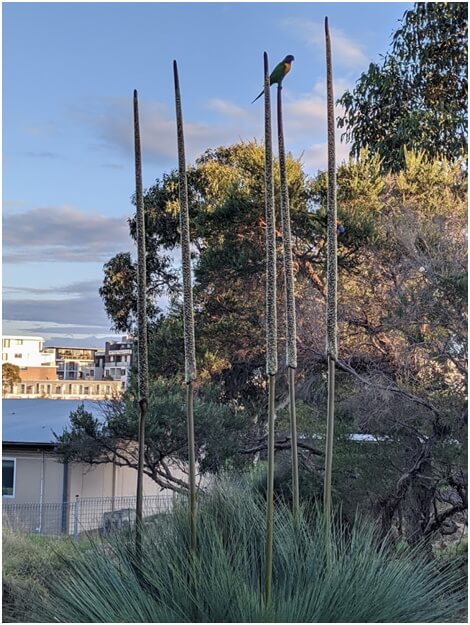
    A Rainbow Lorikeet feeding off the nectar on the spikes of native Grass Trees (Xanthorrhoea resinosa).
    A Rainbow Lorikeet feeding off the nectar on the spikes of native Grass Trees (Xanthorrhoea resinosa).
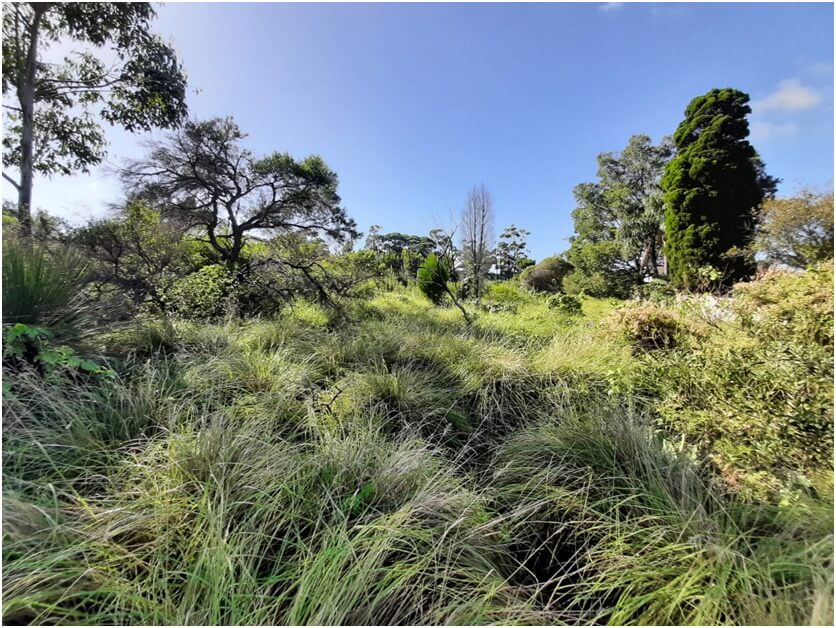
    ESBS remnant covered by clumps of dense African Love Grass (Eragrostis curvula), inhibiting the growth of native plant species.
    ESBS remnant covered by clumps of dense African Love Grass (Eragrostis curvula), inhibiting the growth of native plant species
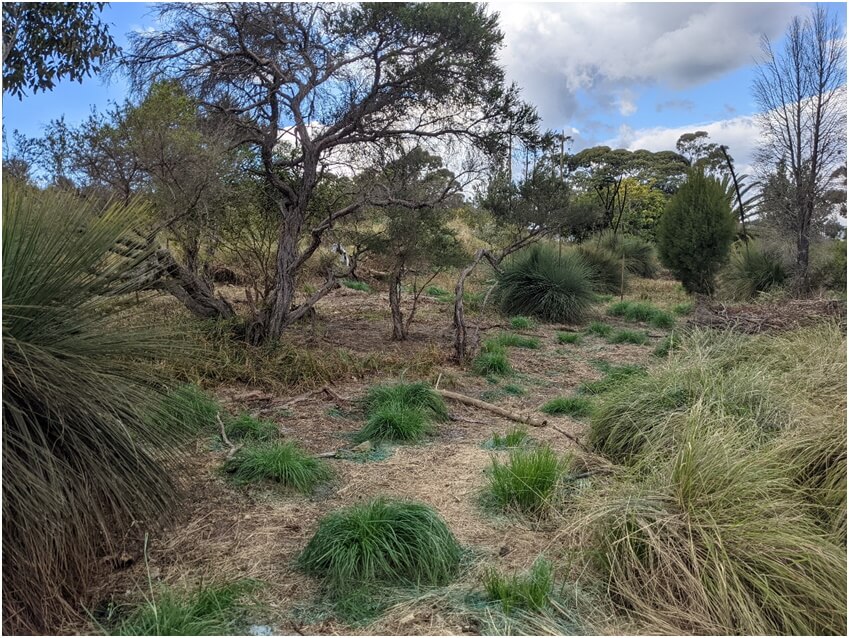
    ESBS remnant after works were completed showing the removal of African Love Grass. Patch now given a chance to regenerate.
    ESBS remnant after works were completed showing the removal of African Love Grass. Patch now given a chance to regenerate.

    The running of the project involved four site visits which focused on removing noxious weeds such as African Love Grass (Eragrostis curvula), Morning Glory (Ipomea indica), Common Couch (Cynodon dactylon), Lantana (Lantana camara) and Turkey Rhubarb (Acetosa sagittata). Removal of these weeds was primarily achieved via firstly brush cutting masses of African Love Grasses covering the work area, hence creating access to the ground cover weeds and vines, thus enabling efficient and effective hand removal. ‘Clear ground raking’ was then applied. This bush regeneration practice involves raking and scraping back excess mulch, which then exposes the bare sand of the remnant which hopefully provides more optimal conditions for native seed germination.

    While working on site, we discovered and identified some unique native floral species such as the Daphne Heath (Brachyloma daphnoides), Bloodroot (Haemodorum planifolium), Variable Sword-Sedge (Lepidosperma laterale), Flaky-Barked Tea-Tree (Leptospermum trinervium) and Twining Glycine (Glycine clandestina). Hopefully, as a result of our efforts, the regeneration of the site can occur a little more easily. The native plants there will have room for growth and the seed bank has been given the best chance for activation.

    Overall, this project was a highly rewarding experience for all involved. To begin the process of reverting the site back to its natural state and hopefully restoring its functionality, from a dense weedy patch, was a satisfying feeling for us. Being situated on school grounds provides a unique opportunity for remnant to be used a valuable educational tool for students, teachers and the general public going forward.
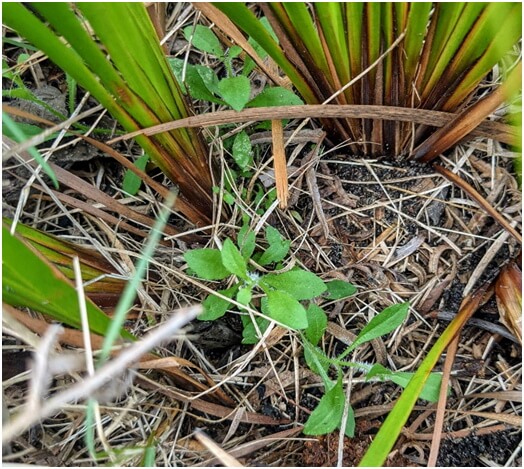
    Regeneration of Pomax (Pomax Umbellata) amongst Variable Sword-Sedge (Lepidosperma laterale).
    Regeneration of Pomax (Pomax Umbellata) amongst Variable Sword-Sedge (Lepidosperma laterale). Lepidosperma species are indicators of relatively undisturbed original ESBS soil.
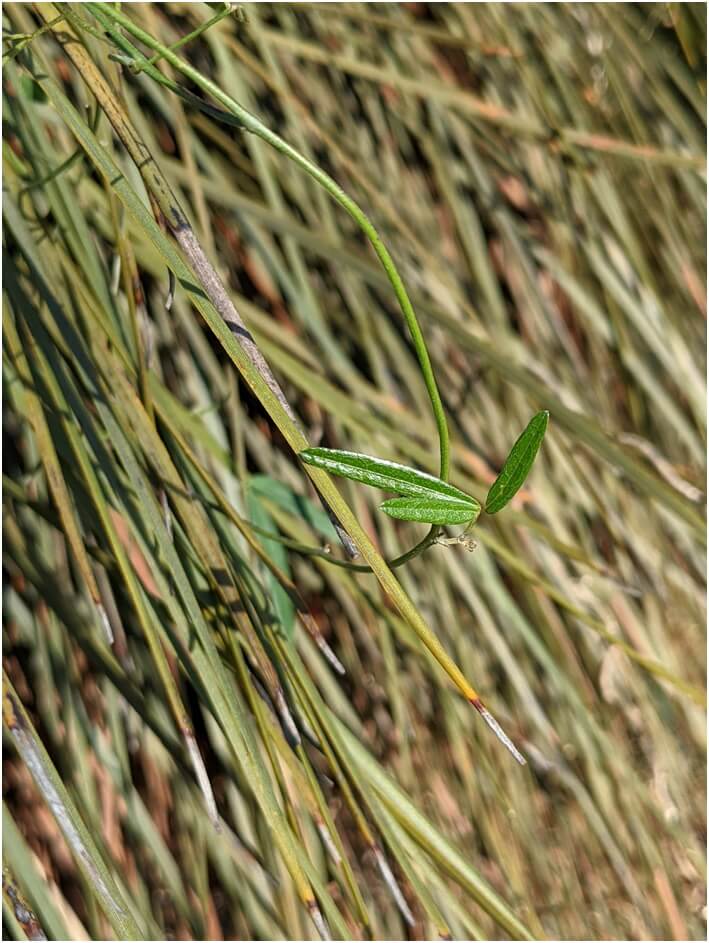
    Twining Glycine (Glycine clandestina) amongst the Grass Trees.
    Twining Glycine (Glycine clandestina) amongst the Grass Trees.

  • Provest Creek Ecological Restoration

    Provest Creek Ecological Restoration

    Our client, Wild Habitats Inc., received funding through the Federal CEP (Community Environment Program) to restore Provest Creek in Hornsby Heights Sydney back to a healthy creekline. Provest Creek is fed primarily by storm water collected in the local urban catchment. At the top of the catchment is Montview Oval which was created from an old landfill site. A quarry operation mining clay shale and fireclay was also in operation from 1960 to 1975.

    The restoration will focus on the areas of the creek that are part of Berowra Valley National Park with the permission of NPWS (NSW Parks and Wildlife Service.) We will be attempting to do the restoration by applying the SERA (Society of Ecological Restoration Australiasia) standards. The challenge is that we need to incorporate knowledge which is normally difficult to obtain for Bush Regenerators. The grant will allow us to use the services of an ecologist so that we can try and make sure that our regeneration benefits the local fauna.

    SERA standards require us to assess the site based on the following attributes with a one to five star rating. This allows us to create a Recovery Wheel and is a good measure of our progress when viewed at the beginning and end of a project.

    sera recovery wheel
    Dense ground cover of Eragrostis curvula (African Love Grass) and Ageratina adenophora (Crofton) crowding out native grasses.
    Dense ground cover of Eragrostis curvula (African Love Grass) and Ageratina adenophora (Crofton) crowding out native grasses.
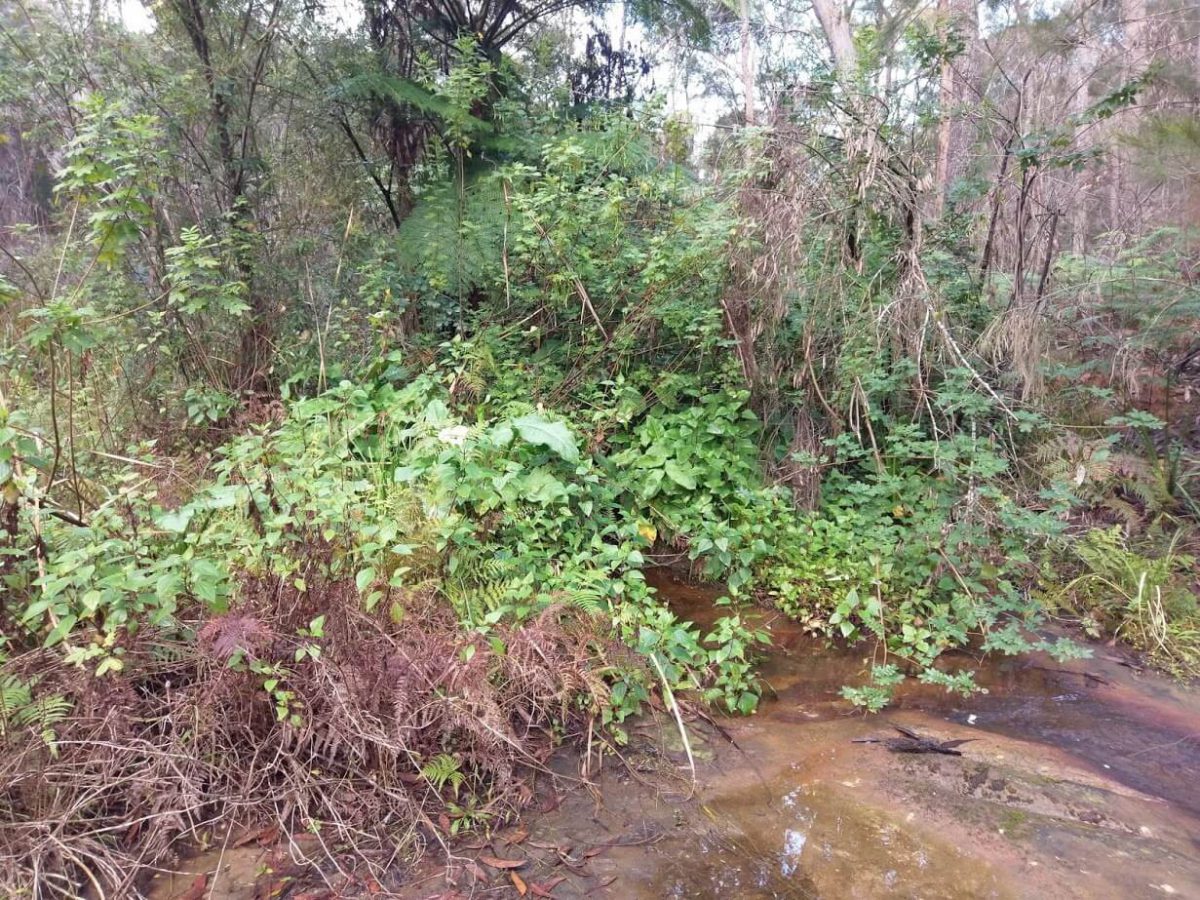
    Zantedeschia aethiopica (Arum Lily) crowding creekline.
    Zantedeschia aethiopica (Arum Lily) crowding creekline. They are absorbing excess nutrient and possibly providing habitat. Should they be removed?